
When we are looking into beginnings of printed news in English, we are looking at Early Modern English, the language of Shakespeare and Milton. Newspapers from that period offer a window into how the English language developed from Middle English to the language we speak today. It also marks the transition from Middle Ages to Renaissance and towards Enlightenment.
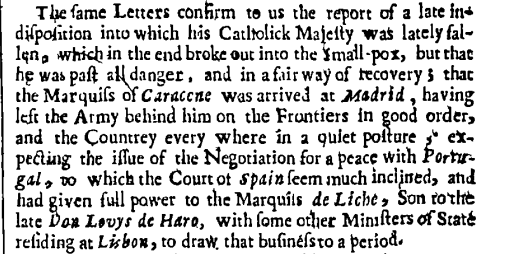
The main characteristics of EModE are a further simplification of inflections, an increase in the number of prepositions and auxiliaries, and changes in pronunciation. It is a noticeable increase in capitalization and punctuation, but it is still more decorative than grammatical compared to Modern English. In the 18th century, things were changing due to increased prescriptiveness. There was an effort to stop the further development of English towards becoming a fully analytic language and to keep elements of the previous synthetic stage. Some of the most famous discussions about proper English use stem from Robert Lowth’s Short Introduction to English Grammar from 1762. Lowth introduced a number of rules, and many were based on Latin grammar.
So, when arguing with strangers on the internet or correcting students in the classroom, it is good to know that the idea of how terrible is to split infinitives, say who instead of whom, say “It is me” instead of “It is I,” started in the 18th century with Lowth, the Bishop of London, and in most cases had nothing to do with organic English language. It rather was a vision that certain educated people had about English and its future. Newspapers were essential in enforcing the rules and making those changes permanent.